Antibiotic Resistance
What doesn’t kill you makes you stronger
Have you ever wondered why you have to finish every single pill in an antibiotic course, even if you feel better halfway through? Stopping early might feel harmless, but it contributes to the catastrophic emergence of “superbugs”.
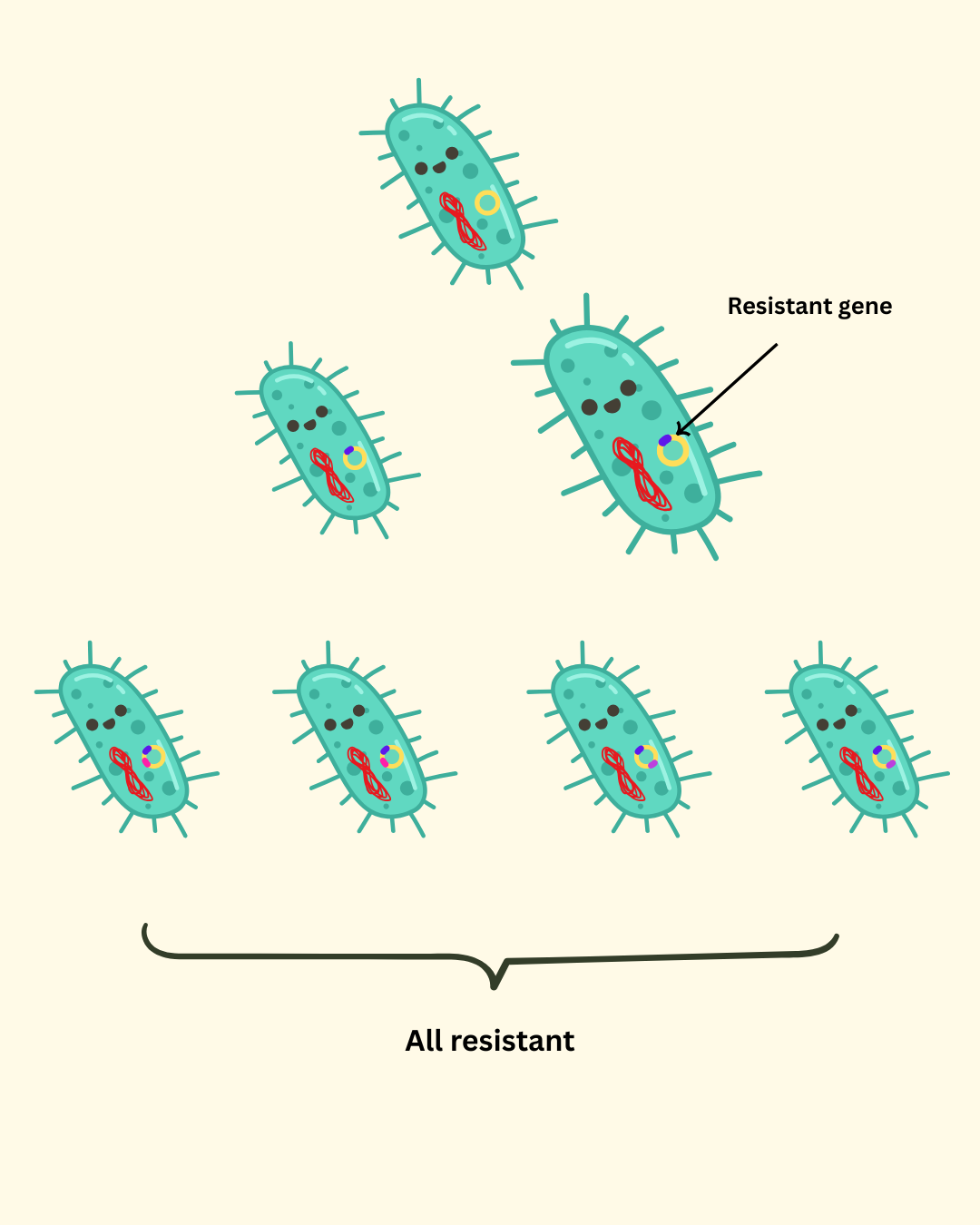
Bacteria primarily multiply through binary fission, a process where a cell replicates its DNA and splits into two identical clones. In contrast, they can also undergo horizontal gene transfer which allows bacteria to swap genetic material with their neighbours- even different species leading to rapid genetic variation which involves the plasmid.
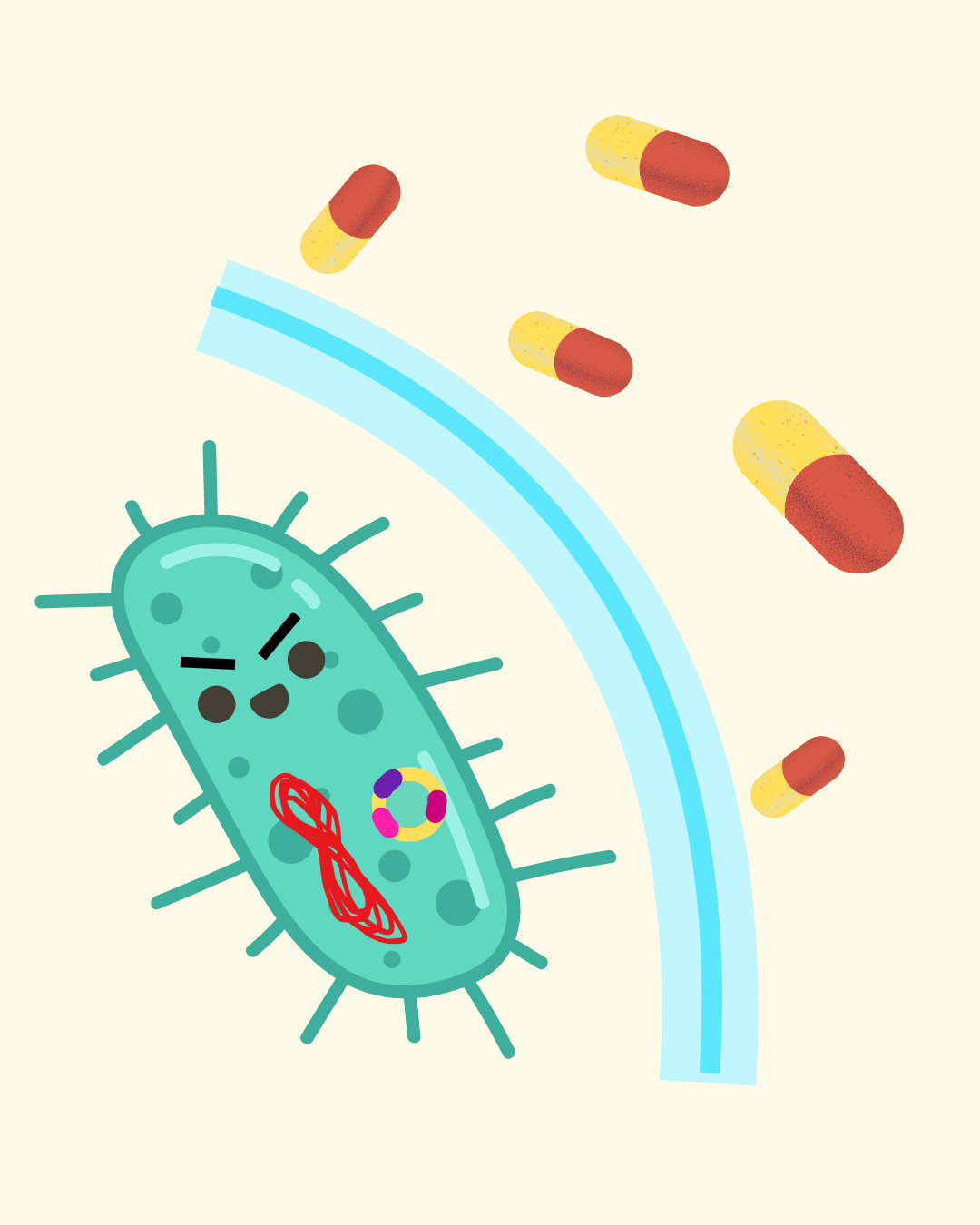
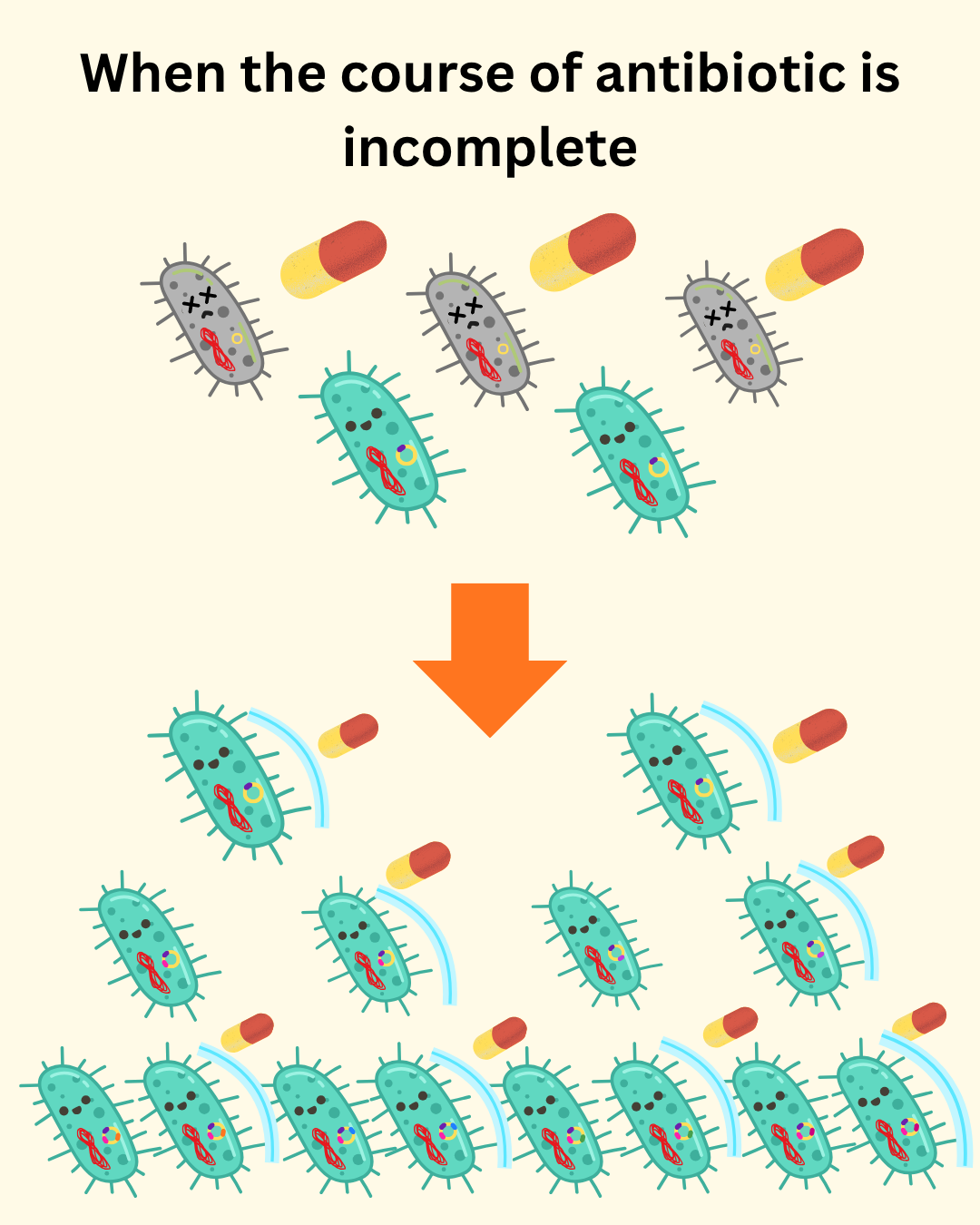
During DNA and plasmid replication, random mutations occur. By pure chance, a mutation might give a single bacterium the advantage to survive from an antibiotic. If the bacterium survives, it passes down its plasmid containing the resistant gene through binary fission or horizontal gene transfer. This creates a colony of bacteria resistant to the antibiotic.
Completing a full course of antibiotic ensures even the most resilient bacteria are exposed to the drug long enough to die. Once the drug has wiped out the bulk of bacteria, your immune system can easily clean up the weakened remnants. This completely terminates the lineage, ensuring no survivors are left to pass on their resistant plasmids.
Stopping an antibiotic early only kills off the weaker susceptible bacteria, leaving the stronger survivors with survival advantages or resistant genes. These bacteria multiply rapidly, creating a new colony that is entirely resistant to the previous drug rendering the previous antibiotics powerless. This makes future infections much difficult to treat, often requiring stronger medications with harsher side effects.
Resolution of bacterial infections involves the interplay of completion of antibiotic course and a robust immune system. Completing the whole course of antibiotic gives your body the upper hand it needs to ensure that the infection today does not turn into an untreatable superbug tomorrow.
Keywords
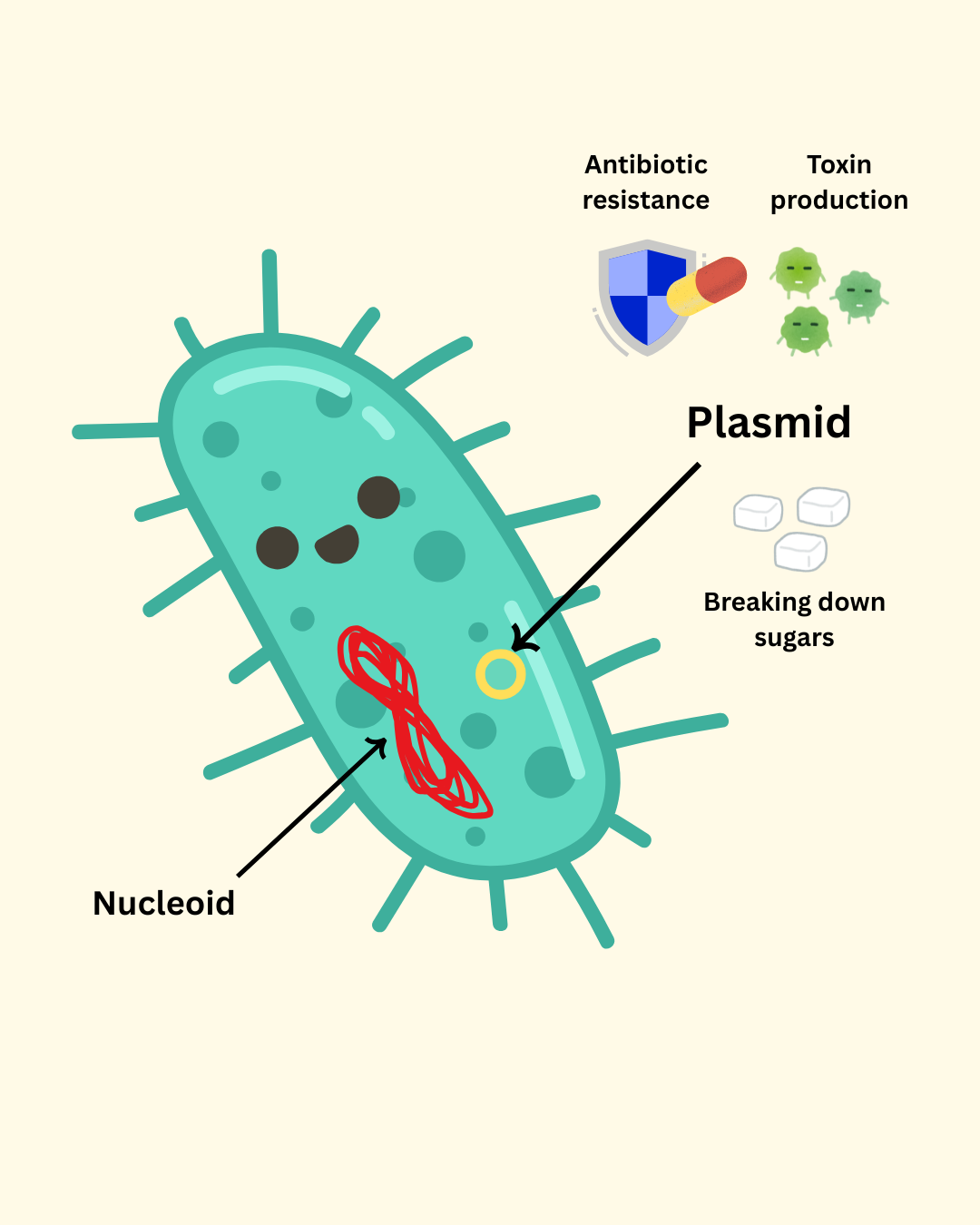
- Plasmids: Plasmids are small, circular loops of DNA separate from the main chromosome. It contains genes that control “bonus properties” such as antibiotic resistance, toxin production or the ability to break down rare sugars. Plasmids replicate independently and will be passed down to every new generation.
Images
References
- Cameranesi, M. M., Limansky, A. S., & Viale, A. M. (2020). Plasmid transfer by conjugation in gram-negative bacteria: From the cellular to the community level. Microbiology and Molecular Biology Reviews, 84(4). https://pmc.ncbi.nlm.nih.gov/articles/PMC7690428/
- del Solar, G., Giraldo, R., Ruiz-Echevarría, M. J., Espinosa, M., & Díaz-Orejas, R. (1998). Replication and control of circular bacterial plasmids. Microbiology and Molecular Biology Reviews, 62(2), 434–464. https://pmc.ncbi.nlm.nih.gov/articles/PMC98921/
- McQuillen, R., & Xiao, J. (2016). FtsZ and the division of prokaryotic cells and organelles. Nature Reviews Microbiology, 14(1), 42–51. https://pmc.ncbi.nlm.nih.gov/articles/PMC4757588/
- Parihar, S., Gupta, S., & Singh, R. (2024). Revealing antibiotic resistance’s ancient roots: Insights from pristine ecosystems. Frontiers in Microbiology, 15, 1445155. https://doi.org/10.3389/fmicb.2024.1445155
- Perry, J., Waglechner, N., & Wright, G. (2016). The prehistory of antibiotic resistance. Cold Spring Harbor Perspectives in Medicine, 6(6), a025197. https://pmc.ncbi.nlm.nih.gov/articles/PMC4888810/
- Ritchie, H., & Roser, M. (2024). Antibiotics and antibiotic resistance. Our World in Data. https://ourworldindata.org/antibiotics
- Shintani, M., Sanchez, Z. K., & Kimbara, K. (2015). Genomics of microbial plasmids: Classification and identification based on replication and transfer systems. Frontiers in Microbiology, 6, 242. https://doi.org/10.3389/fmicb.2015.00242
- Sultana, S., et al. (2026). Targeting horizontal gene transfer to combat antimicrobial resistance: A review of mechanisms, drivers, and multi-omics strategies. Infection and Drug Resistance, 19, 452–478. https://www.dovepress.com/targeting-horizontal-gene-transfer-to-combat-antimicrobial-resistance–peer-reviewed-fulltext-article-IDR