Blue Sky

Above us is a blue illusion
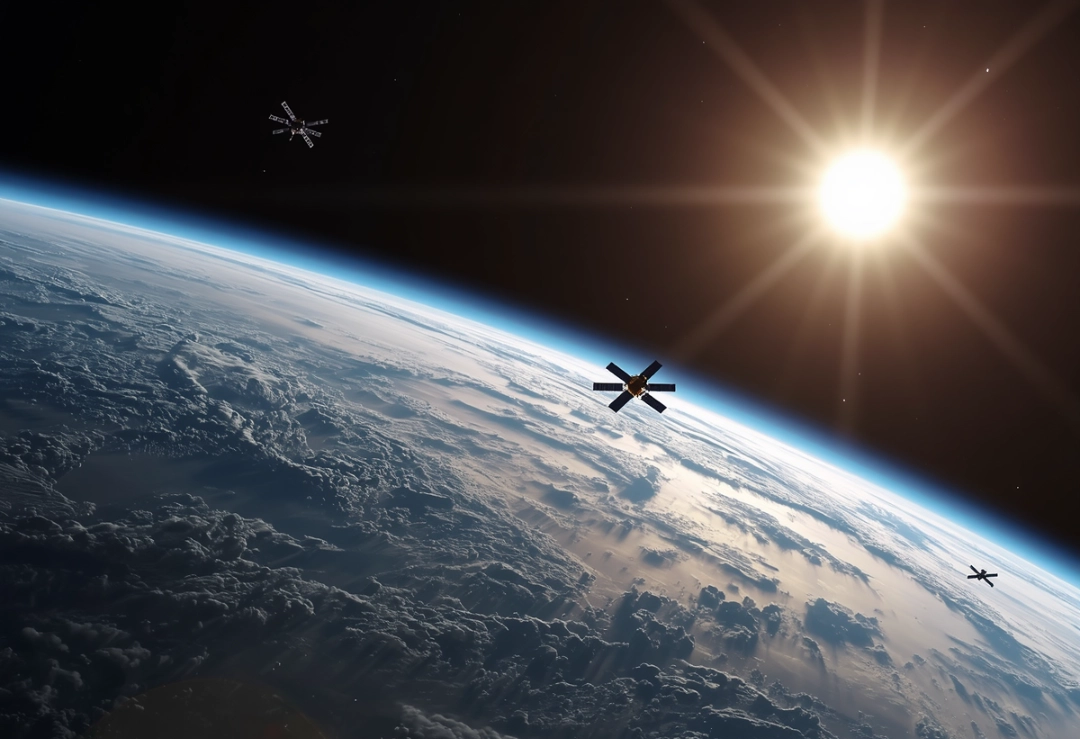
Have you ever wondered why the sky appears so bright and blue during the day, while in contrast, the outer space beyond us looks like a dark void?
The answer lies in something Earth has that outer space mostly lacks: an atmosphere.
Earth’s atmosphere is filled with tiny molecules and particles. When sunlight passes through the atmosphere, the light scatters in different directions before eventually reaching our eyes. In outer space, however, there are almost no particles to scatter the light, so space remains dark even when the Sun is shining.
But why does the sky specifically appear blue?
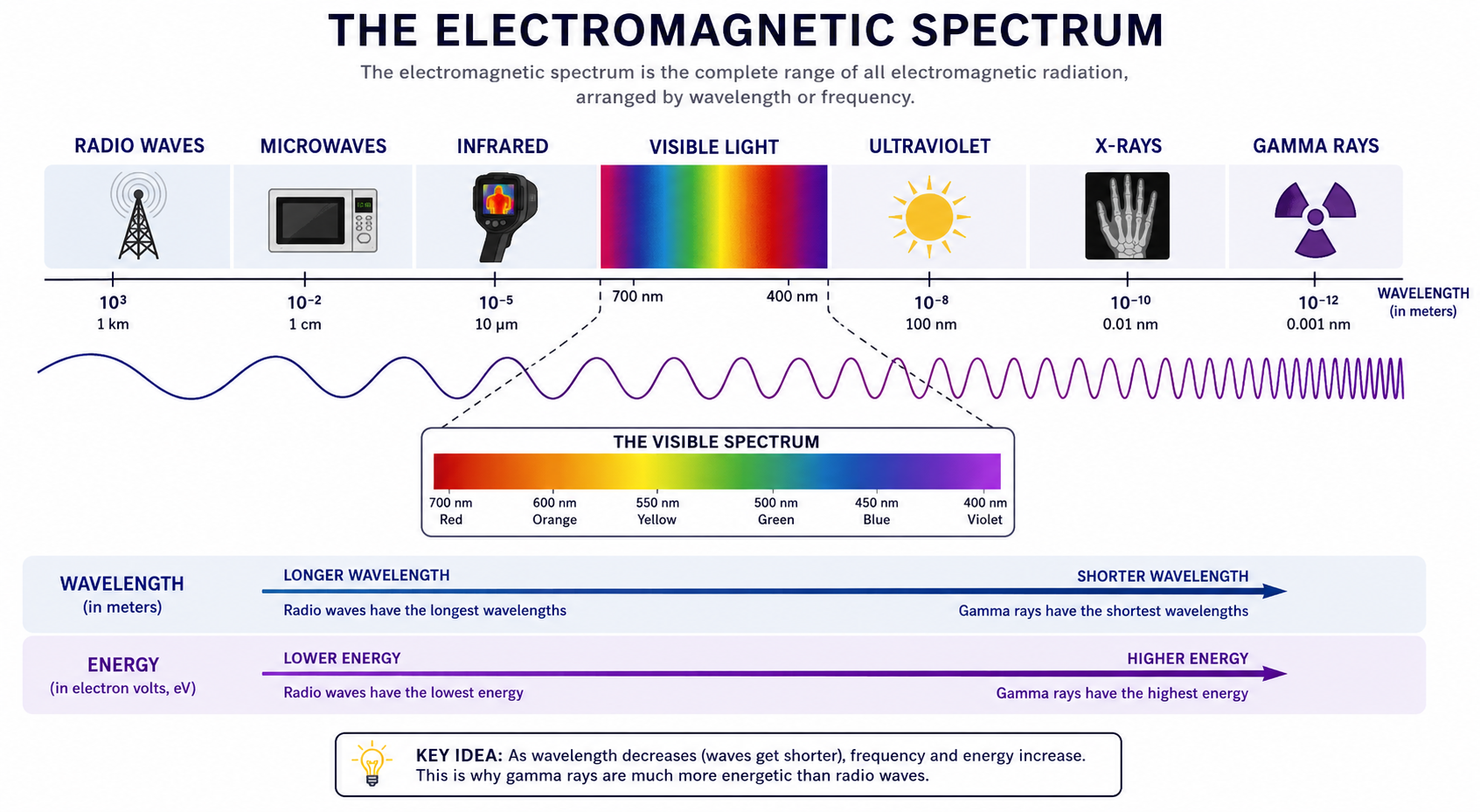
White sunlight is actually made up of many different colors — the colors of the rainbow. Each color has a different wavelength within the Electromagnetic Radiation spectrum. Red light has the longest wavelength, while blue and violet have much shorter wavelengths.
When sunlight enters Earth’s atmosphere, shorter wavelengths like blue and violet scatter much more easily in all directions while the longer wavelengths pass through. Our eyes are also more sensitive to blue light than violet, which is why the sky appears blue to us. 🏞🌏
Keywords
Atmosphere: A layer of gas or layers of gases that envelope a planet, and is held in place by the gravity of the planetary body. A planet retains an atmosphere when the gravity is great and the temperature of the atmosphere is low。
Classical Wave Theory: The intensity of the light determines the amplitude of the wave, and so a greater light intensity should cause the electrons on the metal to oscillate more violently and to be ejected with a greater kinetic energy.
Wavelength: Wavelength is the distance between identical points (adjacent crests) in the adjacent cycles of a waveform signal propagated in space or along a wire. Wavelength is inversely related to frequency, which refers to the number of wave cycles per second. The higher the frequency of the signal, the shorter the wavelength.
Electromagnetic Radiation: Electromagnetic (EM) radiation is a form of energy that is all around us and takes many forms, such as radio waves, microwaves, infrared-radiation, ultraviolet-radiation, X-rays and gamma rays. Sunlight is also a form of EM energy, but visible light is only a small portion of the EM spectrum, which contains a broad range of electromagnetic wavelengths.
Images