Morse Code
SOS: The message that means nothing
Have you ever wondered what you can do to call for help when you are stranded on a deserted island with no phone or internet? You have probably heard of SOS, the international distress signal used during emergencies. But what does it actually mean?
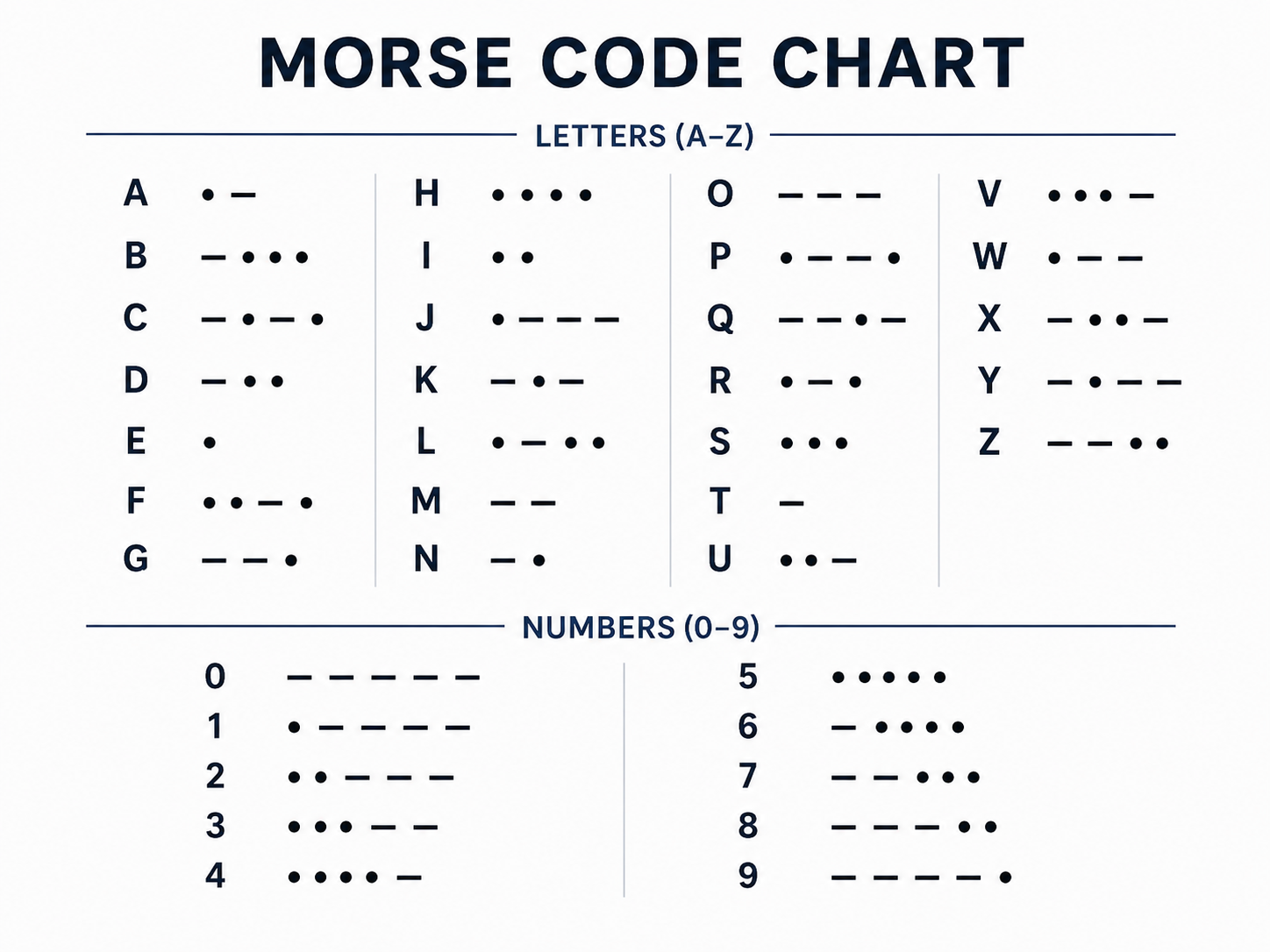
Morse code was developed in the 19th century by Samuel F. B. Morse and Alfred Vail as a method of electronic communication. It represents letters and numbers using two basic signals: short signals, represented by a dot (•), and long signals, represented by a dash (–).
The system was designed to make communication efficient. More commonly used letters were assigned shorter codes. For example, the letter E, the most frequently used letter in English, has the shortest Morse code: a single dot (•). So how did SOS become the universal distress signal?
SOS is represented in Morse code as: •• --- ••• .
This combination was chosen because it is simple, symmetrical, and unlikely to be confused with other messages. Contrary to popular belief, SOS does not stand for phrases such as “Save Our Ship” or “Save Our Souls.” It does not have any official meaning in English — it was simply chosen because it is easy to recognize during an emergency.
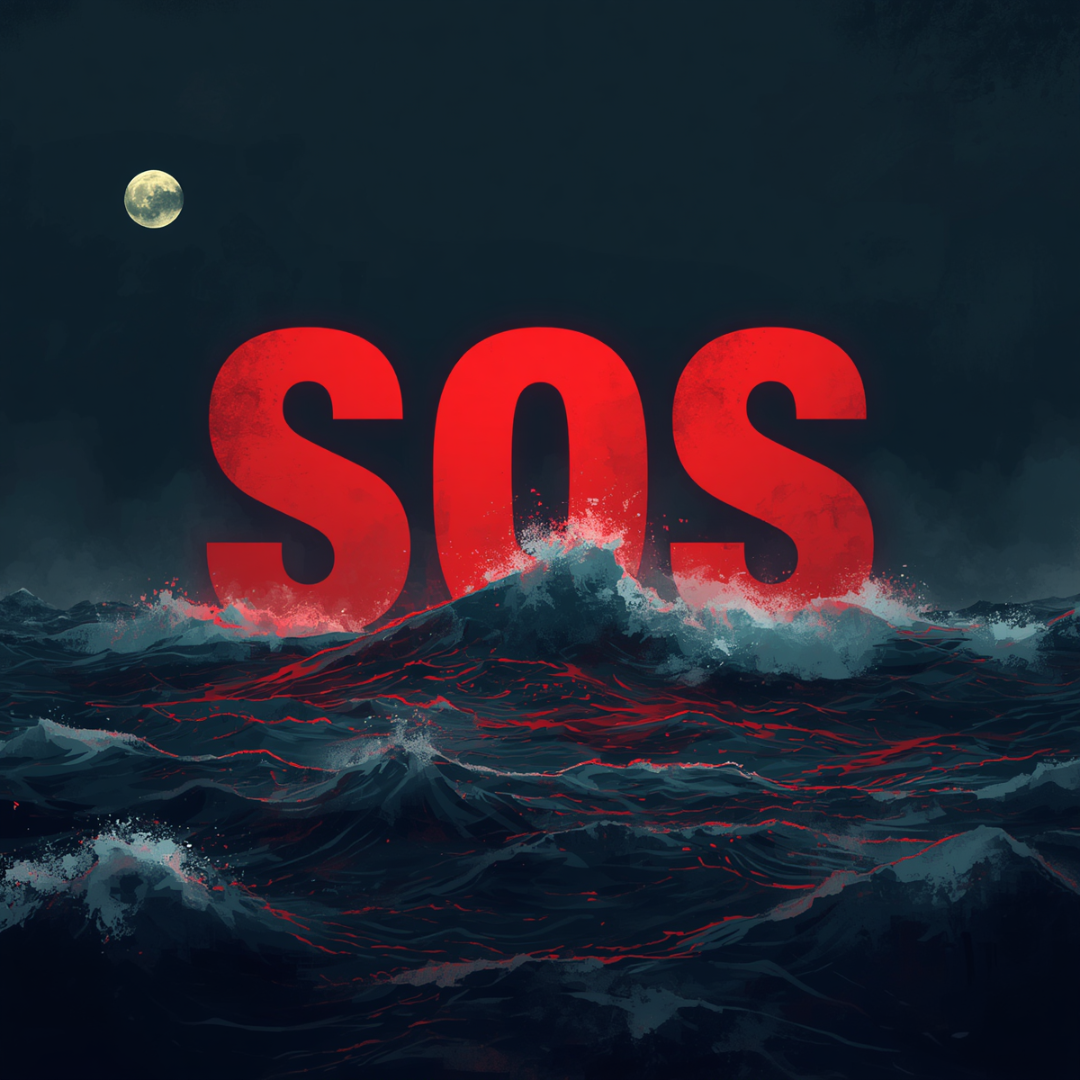
One of the reasons Morse code became so powerful is its simplicity. It can be transmitted using many improvised methods: flashing a light, tapping on a surface, or producing sounds with different durations. Even the written SOS symbol itself is easy for people to recognize.
With only two simple signals — dots and dashes — Morse code became one of the most versatile communication systems ever created.
Isn’t it clever that such a simple pattern can carry a message that may save a life?
Fun Fact
Before electronic communication existed, messages were often delivered physically by messengers travelling long distances.
One popular story tells that Samuel Morse experienced the limitations of slow communication firsthand when he received a delayed message informing him that his wife was seriously ill. By the time he arrived, she had already passed away and been buried.
This experience is said to have motivated Morse to develop a faster method of communication, eventually contributing to the creation of the telegraph and Morse code.
Keywords
- Abbreviation: A shortened form of a word or phrase. For example: SOS’s abbreviation is not “Save Our Ship” or “Save Our Souls”.
Images