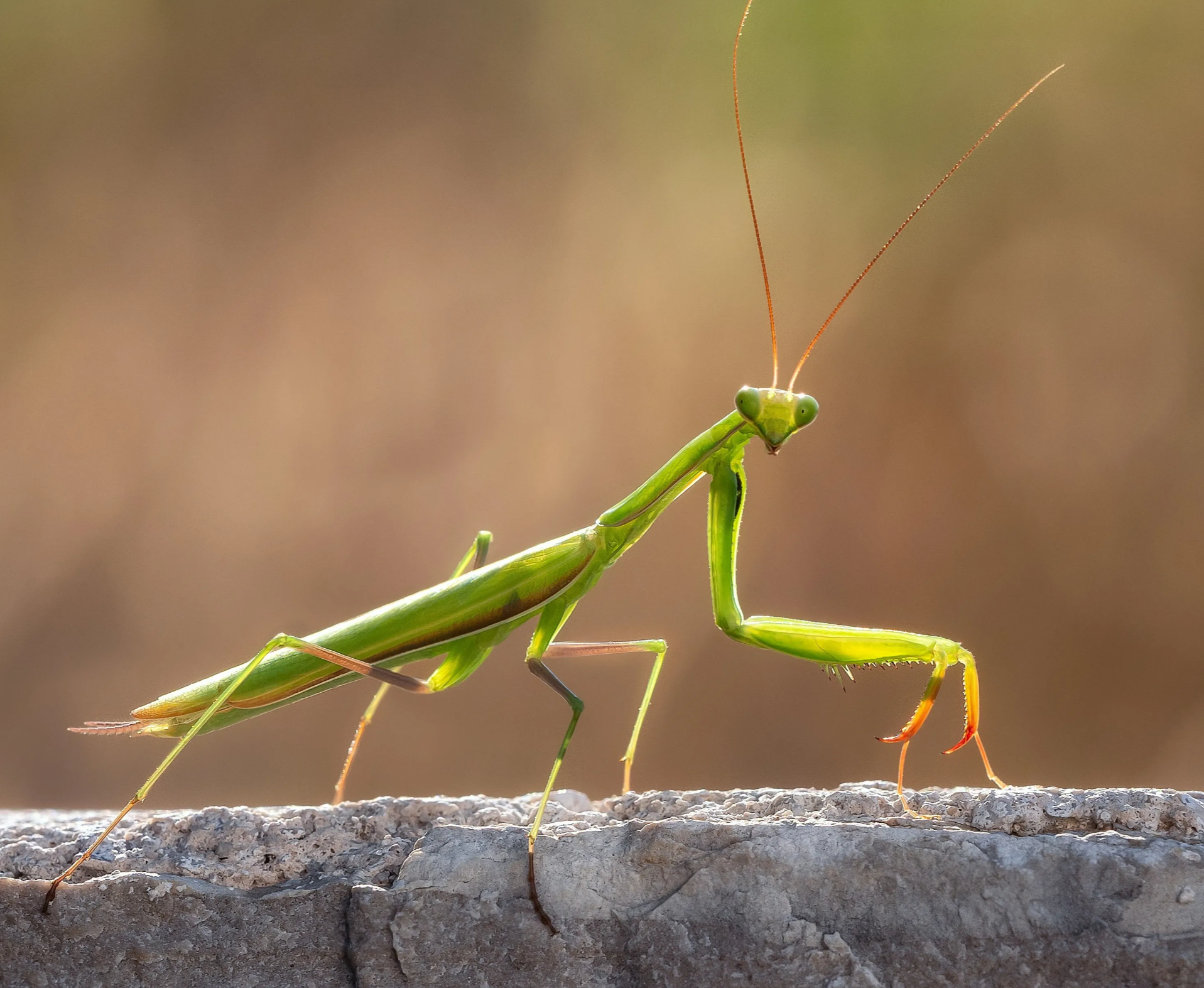
Praying Mantis
Love can kill
Have you ever wondered how these beautiful little insects reproduce and pass their genes on to the next generation? Enter one of nature’s most fascinating insects: the Praying Mantis.
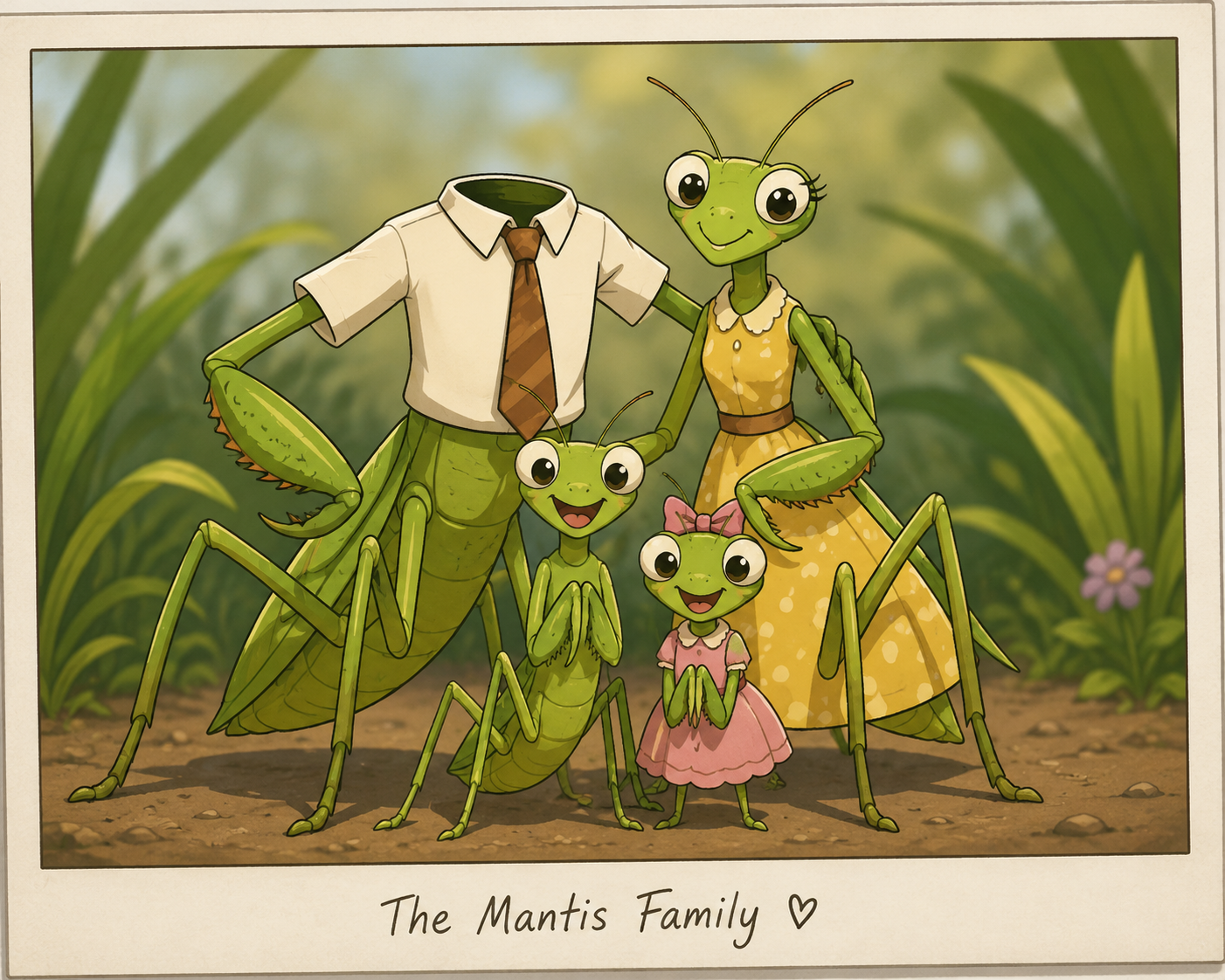
During mating season, male mantises become more active as they search for potential mates. But in their pursuit of love, they may lose more than just their hearts — for some, it becomes a suicide mission.
After mating, the female mantis may bite off the male’s head and eventually consume the rest of his body. As horrifying as this sounds, the behavior may actually increase reproductive success. The nutrients gained from the male can help the female produce more eggs, increasing the chances of the male’s DNA being passed on to the next generation.
In a strange way, the male literally sacrifices himself so that his offspring may survive.
Though not all praying mantises cannibalize their mates, when they do, it is perhaps nature’s most terrifying version of “true love.”
Love can break one's heart,
but it can also consume all of you.
Keywords
- Genes: A gene is the basic physical and functional unit of heredity. Genes are made up of DNA. Some genes act as instructions to make molecules called proteins. However, many genes do not code for proteins. In humans, genes vary in size from a few hundred DNA bases to more than 2 million bases.
- Cannibalism: Cannibalism is the act of consuming another individual of the same species as food. Cannibalism is a common ecological interaction in the animal kingdom and has been recorded in more than 1,500 species.
- DNA: DNA stands for deoxyribonucleic acid, which is the molecule inside cells that contains the genetic information responsible for the development and function of an organism. DNA molecules allow this information to be passed from one generation to the next.
Images