Rainbow Part 1: Formation
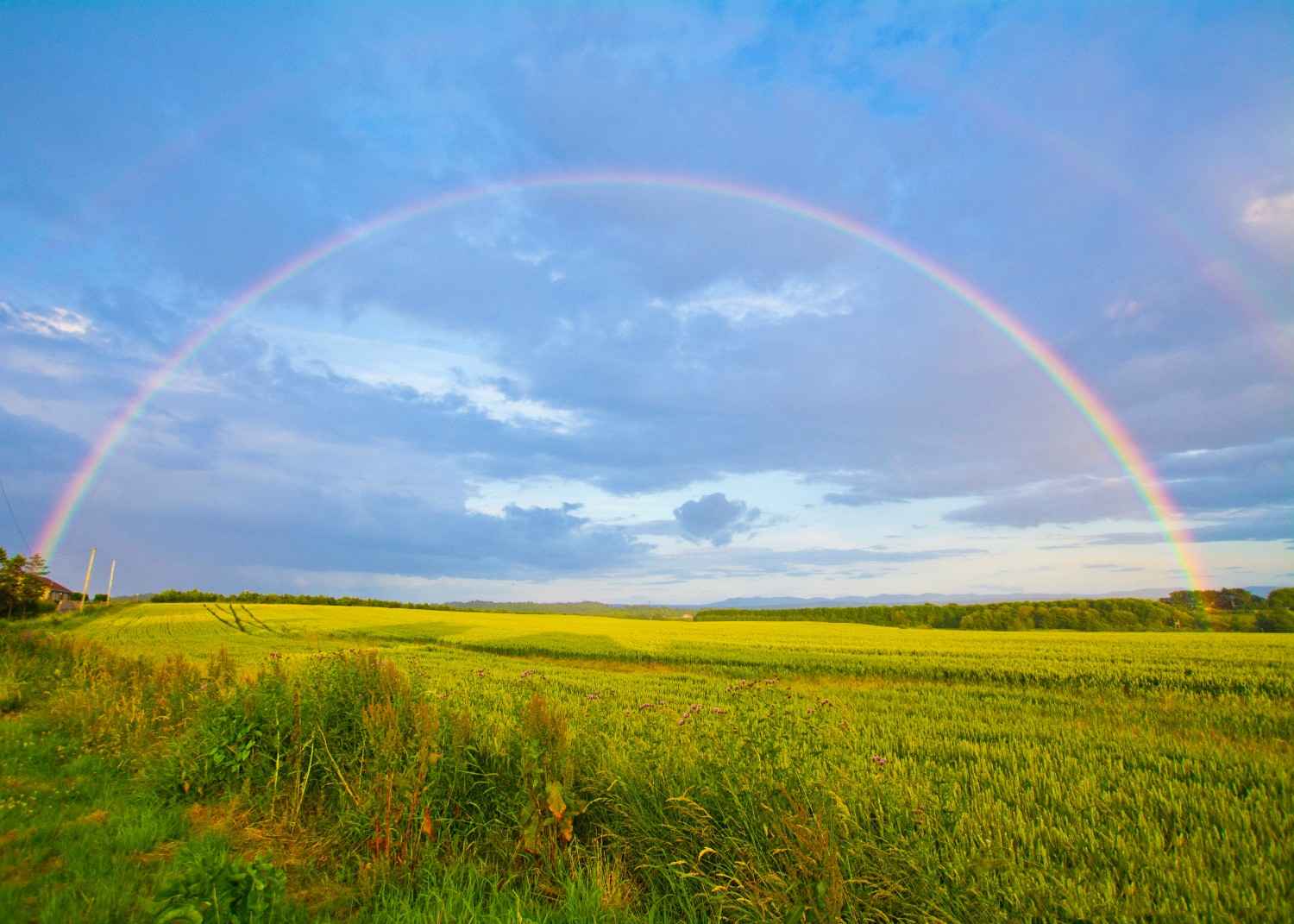
Chasing the end of a rainbow
Have you ever wondered what brings this beautiful combination of colors to the sky when the Sun shines after a rainfall? Let’s talk about one of nature’s most stunning phenomena: the rainbow!
So what exactly is a rainbow? Why do we usually see it after the rain? And why does it always appear as an arc?
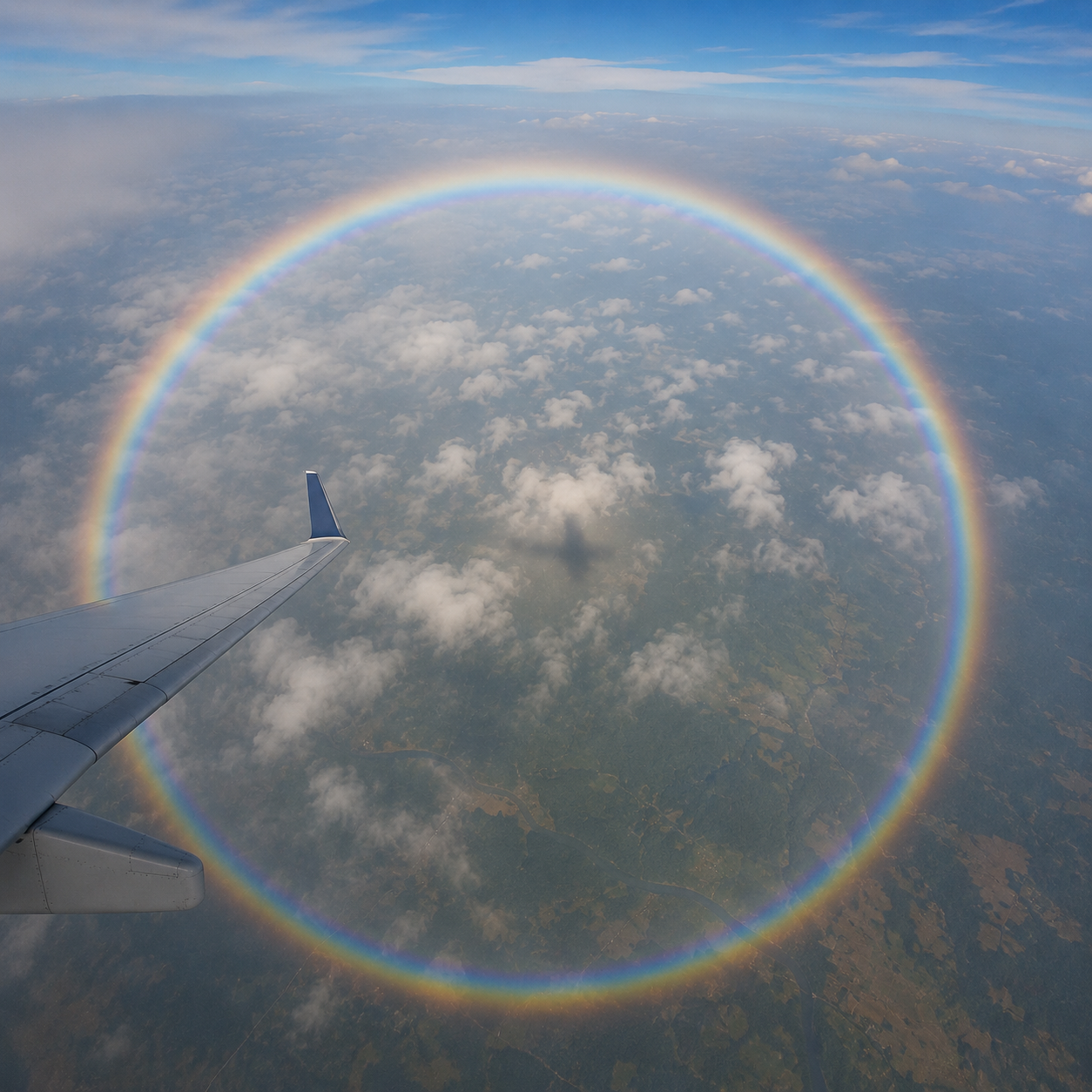
First of all, a rainbow is not actually an arc, but a full circle. We usually see only part of it because the lower half lies below the horizon when we are standing on the ground. Under the right conditions, such as from an airplane, it is possible to see a complete circular rainbow.
So how does a rainbow form?
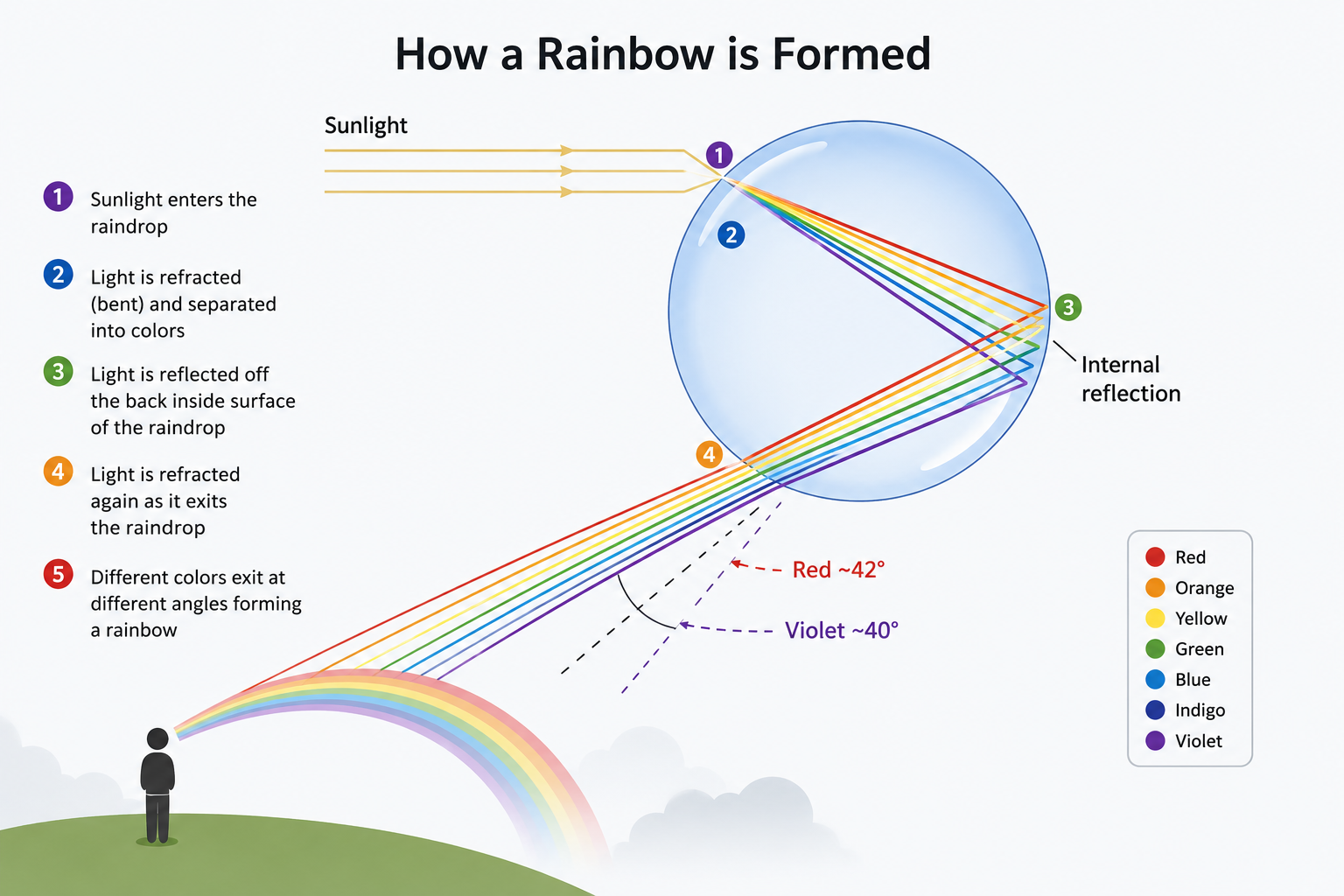
Like many beautiful natural phenomena, it all comes down to light. After a rainfall, countless tiny water droplets remain suspended in the air. When sunlight shines from behind you, the light enters these droplets and undergoes refraction, causing it to bend. The light then reflects off the inside of the droplet before exiting through the other side, where it is refracted once again.
Because each color of light has a slightly different wavelength, each color bends by a slightly different amount. This causes the white sunlight to separate into its individual colors, producing the familiar spectrum of a rainbow.
Perhaps the most fascinating fact is that the rainbow you see is unique to you. The colored light must reach your eyes from a very specific angle relative to the direction opposite the Sun, roughly 40° to 42°. When you move, the droplets responsible for the rainbow change as well. This is why you can never reach the end of a rainbow—the rainbow moves with you, continuously being formed by different droplets along your line of sight.
Keywords
- Horizon: The line at which the earth’s surface and the sky appear to meet.
- Refraction: Refraction is the bending of light (it also happens with sound, water and other waves) as it passes from one transparent substance into another. This bending by refraction makes it possible for us to have lenses, magnifying glasses, prisms and rainbows.
- Reflection: Reflection is when light bounces off an object. If the surface is smooth and shiny, like glass, water or polished metal, the light will reflect at the same angle as it hit the surface. For a smooth surface, reflected light rays travel in the same direction.
Images