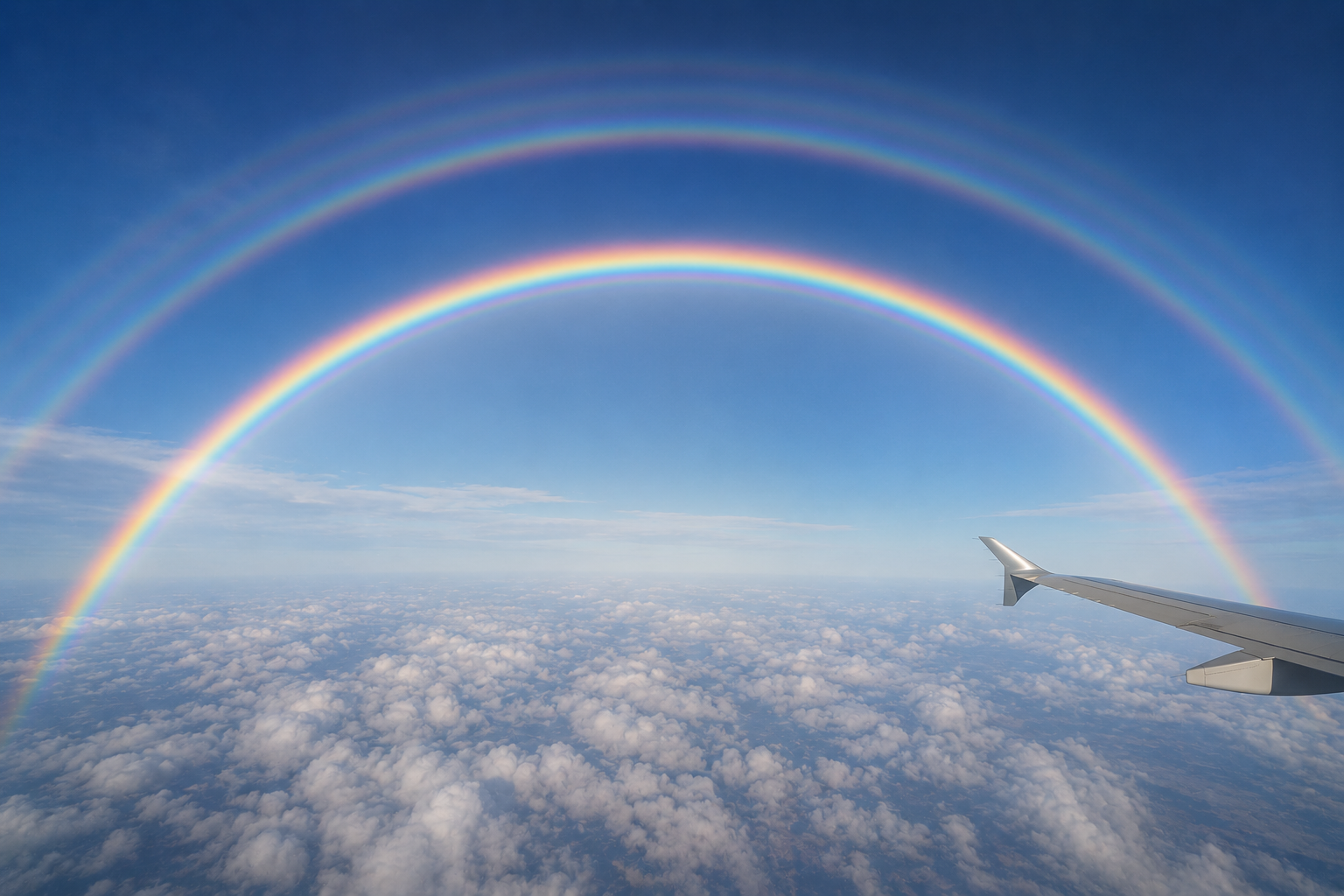
Rainbow Part 2: Color of Light
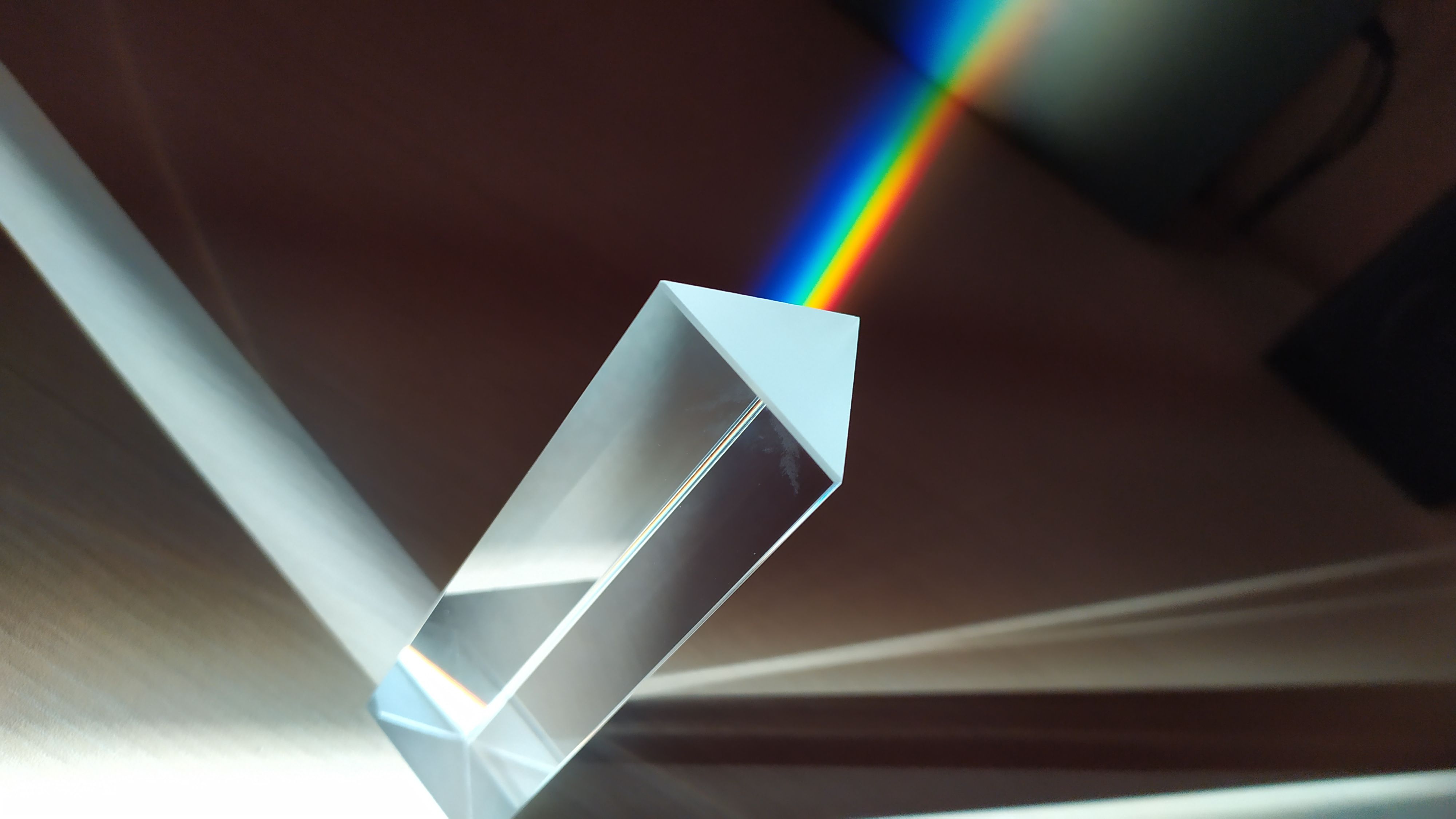
ROYGBIV
Have you ever wondered what the true colours of a rainbow are? Most of us learn that a rainbow consists of seven colours: red, orange, yellow, green, blue, indigo, and violet — or ROYGBIV for short. But if you look closely at a real spectrum, something seems odd..
We can recreate a rainbow using a glass prism. As white light passes through the prism, each colour bends by a slightly different amount, causing the light to spread out into a spectrum. But where exactly is the violet? And why do we often see a light blue colour between blue and green — what we would now call cyan — even though cyan does not appear in ROYGBIV?
To answer this question, we need to go back to the origin of ROYGBIV. When Sir Isaac Newton performed his famous prism experiments, he divided the spectrum into seven colours: red, orange, yellow, green, blue, indigo, and violet. However, the colour names used in Newton’s time do not perfectly match how we classify colours today. In particular, Newton’s “blue” would appear closer to what we now call cyan, while his “indigo” occupied part of the range we often associate with modern blue.
In reality, the visible spectrum is continuous rather than divided into distinct bands. The colours blend smoothly into one another, and the boundaries between them are largely defined by human perception.
This brings us to another interesting question: where are purple, pink, and magenta?
Unlike the colours found in a spectrum, purple and magenta are not associated with a single wavelength of light. Instead, they are produced when our brains perceive a combination of red and blue or violet light. Since red and violet appear at opposite ends of the spectrum, these colours do not normally appear in a rainbow produced by a prism.
Yet sometimes observers report seeing purple or pinkish hues in natural rainbows. How is that possible?
In Part 1, we learned that a rainbow is actually part of a circular pattern. Because light behaves as a wave, interference can occur as light passes through raindrops. Under the right conditions, this interference creates additional coloured bands just inside the primary rainbow. These are known as supernumerary rainbows.
When these additional bands overlap with the colours of the primary rainbow, they can produce subtle purplish or pinkish hues that are not normally present in the primary spectrum. The result is an even more beautiful and complex display than the simple ROYGBIV pattern most of us learn in school.
Roses are red, violets are blue, and purple is just a supernumerary hue.
Keywords
- Isaac Newton: Sir Isaac Newton PRS was an English mathematician, physicist, astronomer, theologian, and author widely recognised as one of the greatest mathematicians and physicists of all time and among the most influential scientists. Sir Isaac Newton PRS was an English mathematician, physicist, astronomer, theologian, and author widely recognised as one of the greatest mathematicians and physicists of all time and among the most influential scientists.
- Interference: Interference of light is a common phenomenon that can be explained classically by the superposition or overlapping of the light waves.
Images