Shape of Gravity
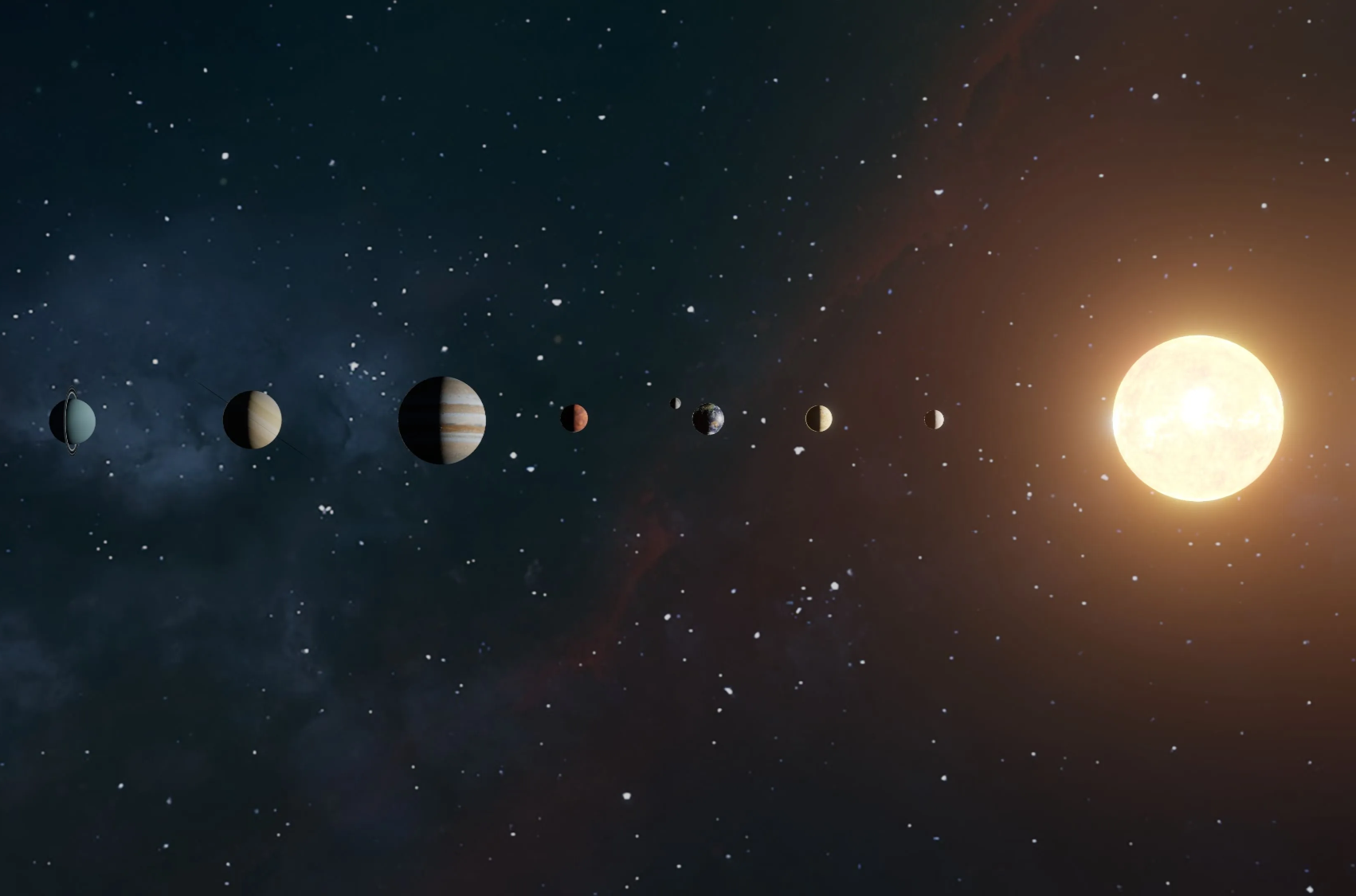
Every planet wants to become a sphere
Have you ever wondered why the Earth is round? Why are almost everything in space—planets and stars—round as well? Why isn’t the Earth flat? And if the Earth is round, why don’t people at the “bottom” fall off?
The answer is gravity.
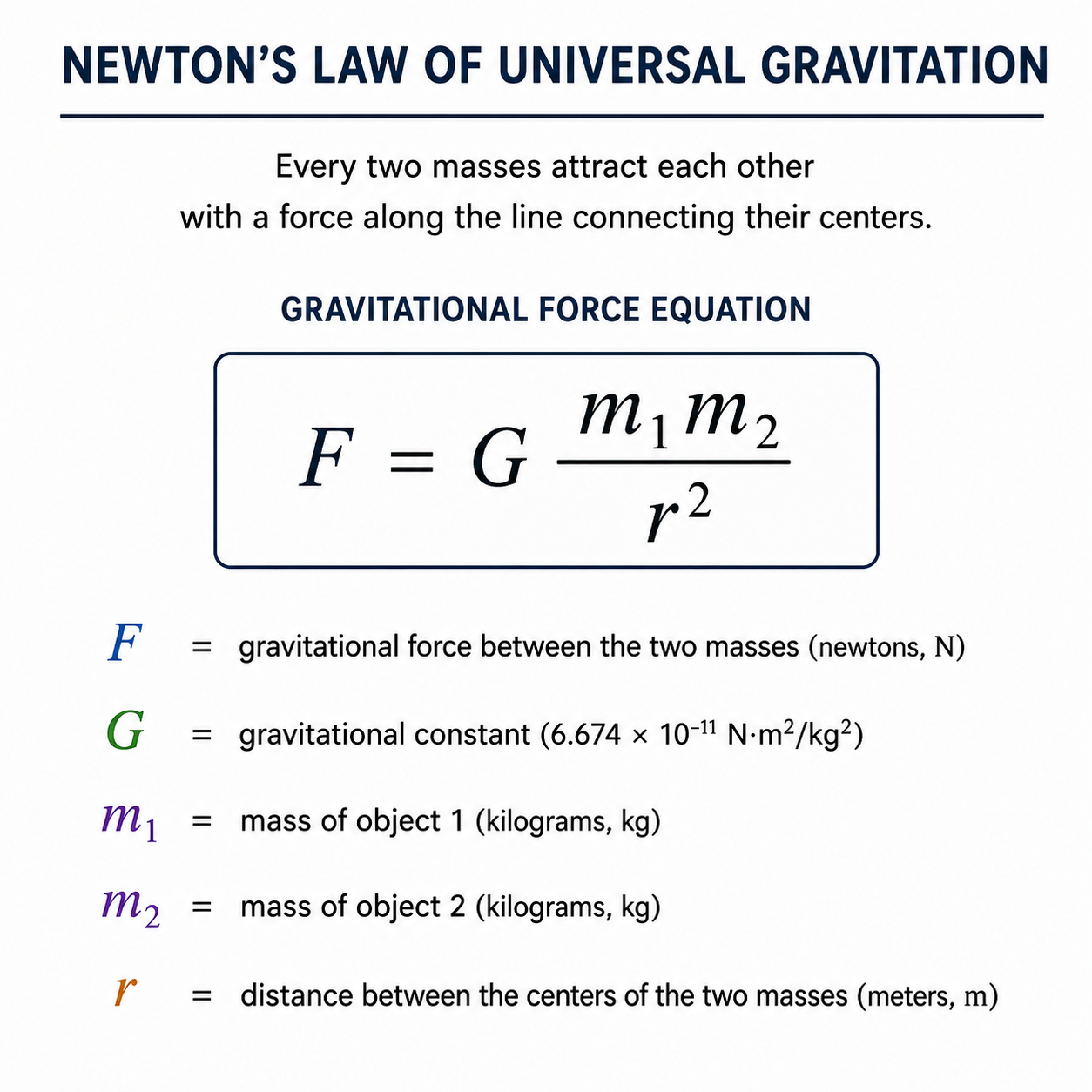
Gravity is one of the **four fundamental forces **of nature. It is well described by Sir Isaac Newton’s law of gravitation and later refined by Albert Einstein’s general theory of relativity. Newton discovered that every object with mass attracts every other object with mass. The strength of this attraction is directly proportional to the masses of the objects and inversely proportional to the square of the distance between them.
For everyday objects, this gravitational force is incredibly tiny—that’s why you and I are not noticeably attracted to each other. But for an object as massive as the Earth, gravity becomes overwhelmingly strong.
The feeling of gravity is simply the Earth and you attracting one another. Every tiny part of the Earth pulls on every tiny part of you, and vice versa. The combined effect of all these tiny gravitational pulls is a force directed toward the Earth’s center of mass.
As a planet forms, gravity pulls its material inward from every direction. Mountains may collapse, valleys may fill, and matter gradually flows toward a shape where gravity is balanced in all directions. The result is a sphere—the most stable shape a large object can naturally form under its own gravity. (More precisely, the Earth is an oblate spheroid, meaning it is slightly flattened at the poles because of its rotation.)
You could imagine creating a planet shaped like a cube or a flat disk. But if gravity were allowed to act over millions of years, the object would gradually collapse and reshape itself into something very close to a sphere!
Gravity doesn't care what shape you begin with—it always pulls you toward a sphere.
Keywords
- 4 Fundamental Forces: There are four fundamental forces at work in the universe: the strong force, the weak force, the electromagnetic force, and the gravitational force. They work over different ranges and have different strengths. Gravity is the weakest but it has an infinite range.
- Directly Proportional: The relationship between 2 quantities where one quantity increases or decreases constantly with respect with another quantity.
- Inversely Proportional: The relationship between 2 quantities where one quantity increases with respect to a decrease in another or vice versa.
Images