Special Relativity Part 3: Length Contraction
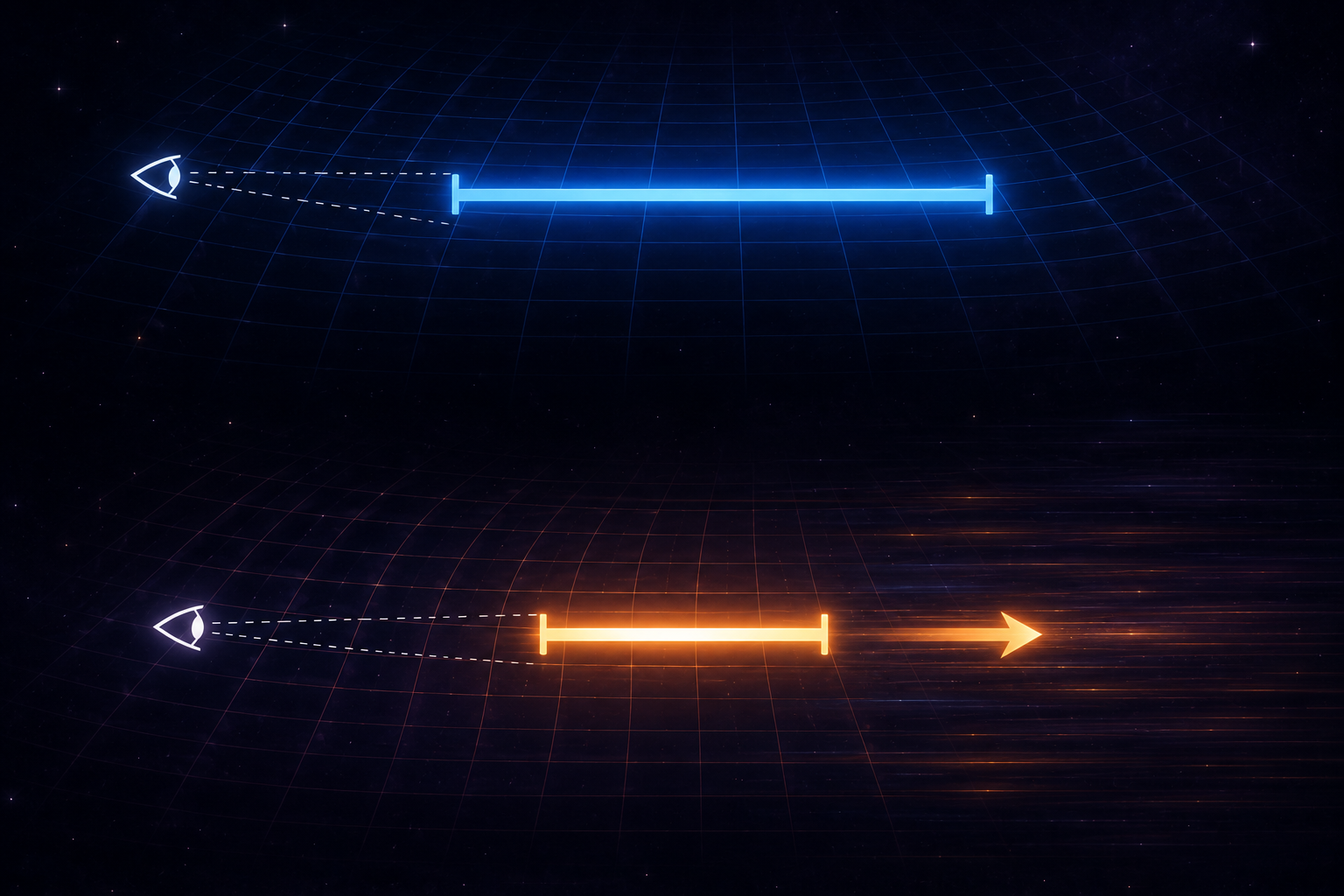
Moving makes you look shorter
Have you ever wondered if the length or size of an object can change according to its speed or the observer’s speed? Sounds ridiculous, right? Apparently, motion not only affects time, it also affects how lengths are measured.
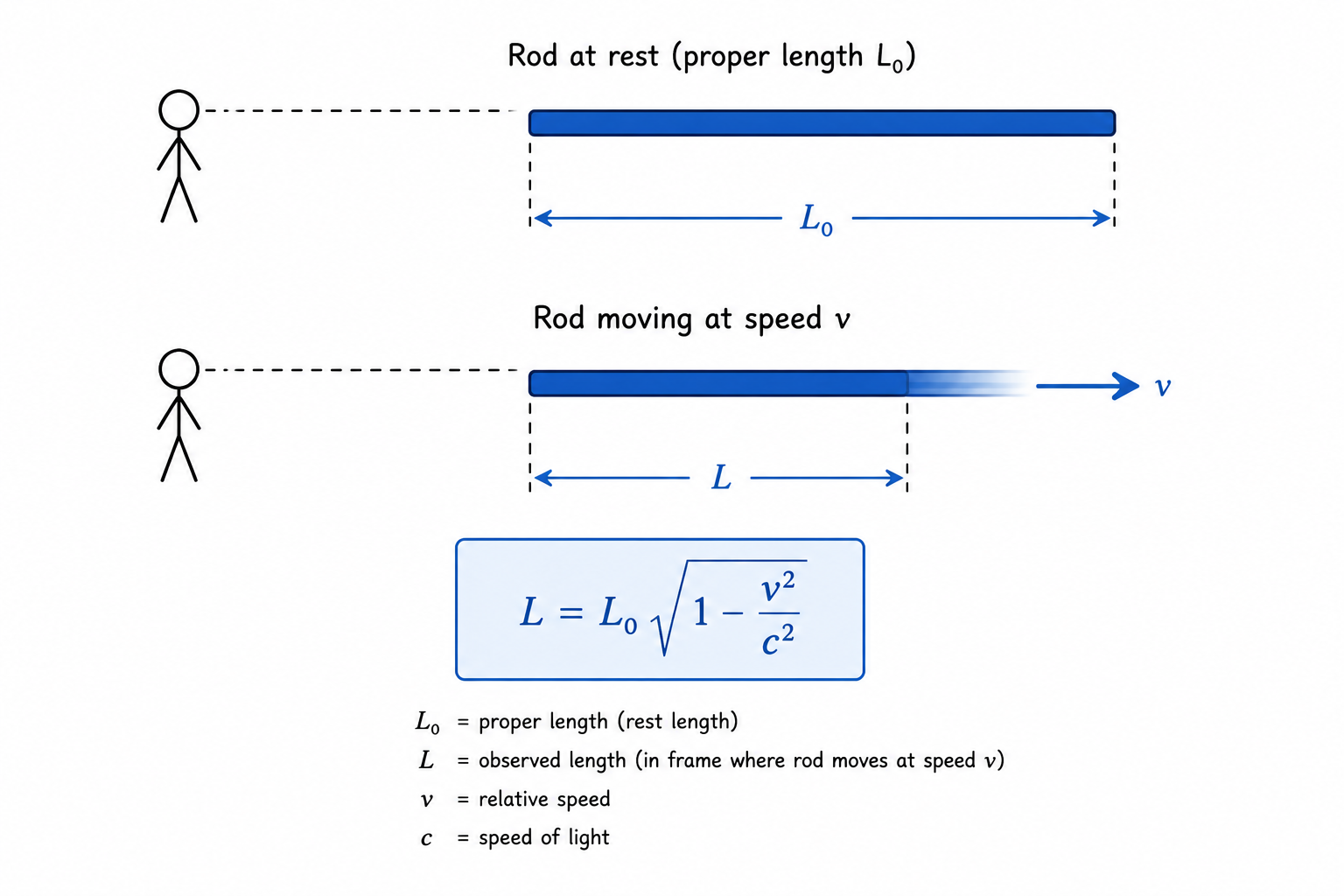
Similar to time dilation, for an observer in an inertial frame of reference, a moving object’s length appears to be** contracted along the direction of motion**. In other words, when you are moving relative to a stationary observer, the observer will perceive your length to be contracted. However, from your perspective, it is the observer’s length that appears contracted.
It is not easy to measure the length of an object while the object is moving, or while you are moving. The front and back of the object must be measured at the same time from your perspective. You can think of it as taking a snapshot of a moving object. The amount by which lengths are contracted depends on how fast we are moving relative to each other. The closer we move to the speed of light, the more distorted our measurements of length become.
To sum up both time dilation and length contraction, as your speed approaches the speed of light, time passes increasingly slowly relative to a stationary observer, while distances in the direction of motion become increasingly contracted.
In the mathematical limit, the time experienced during a journey approaches zero, while the distance to the destination also approaches zero. While in theory, nothing with mass can ever achieve the speed of light!
Images