Stars Part 2: Death
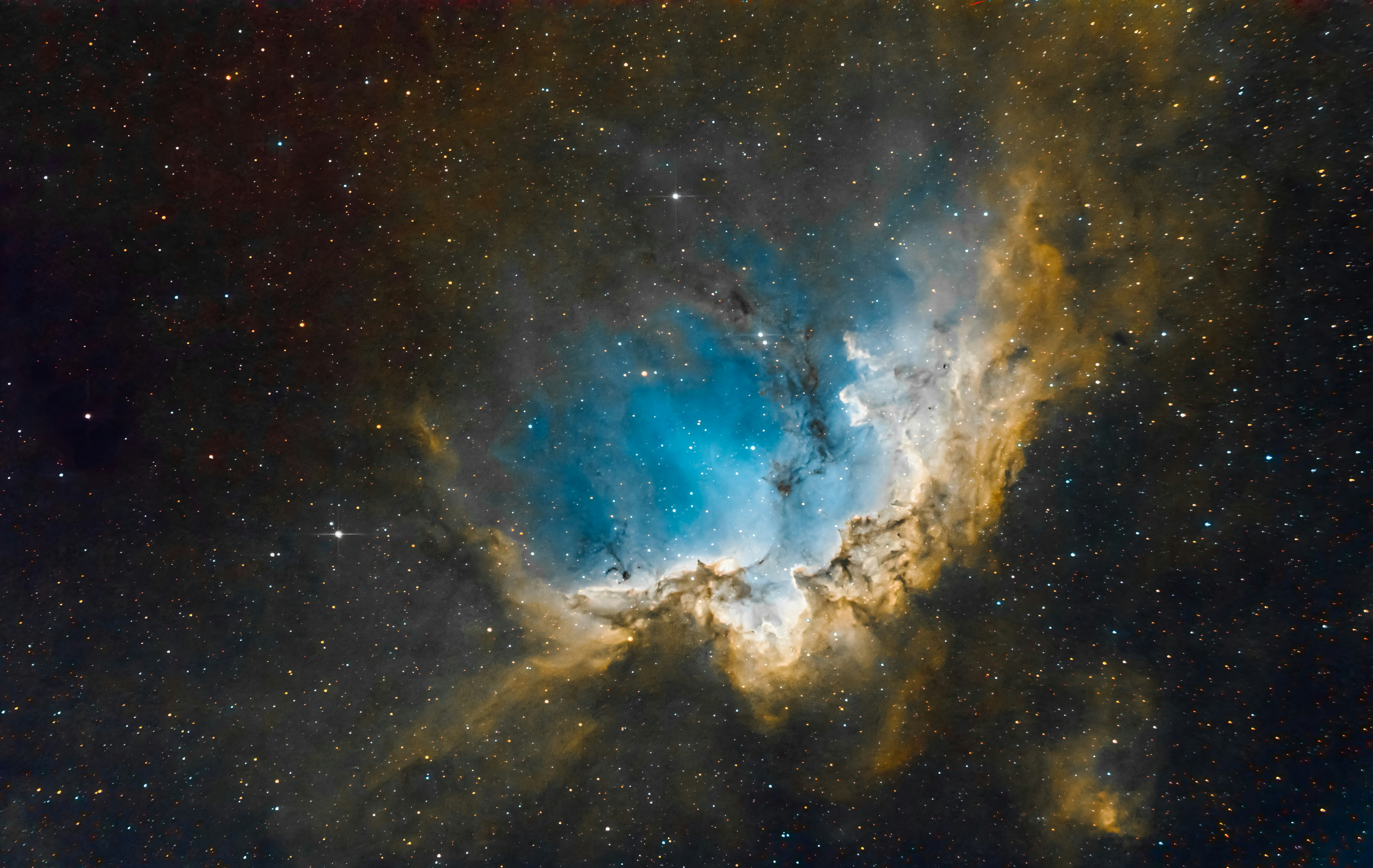
The death that creates life
When you look up at the night sky and admire the beautiful stars, have you ever wondered whether they have a lifespan? How long will they continue to shine? And perhaps more intriguingly, what happens when they die?
Sadly, like all things in the universe, stars do not live forever.
In Part 1, we learned that stars shine because of nuclear fusion, where hydrogen atoms fuse together to form helium. In more massive stars, fusion continues, producing heavier elements such as carbon, oxygen, and eventually iron under immense pressure and temperature.
But this process cannot continue forever.
Once the star runs out of fuel, it can no longer produce enough energy to resist its own gravity. The delicate balance between the outward pressure from fusion and the inward pull of gravity is broken, causing the core to collapse.
For an average-sized star like our Sun, the star expands into a red giant. Eventually, it sheds its outer layers into space, creating a beautiful planetary nebula, while the remaining hot core becomes a white dwarf. Over billions of years, this white dwarf slowly cools and fades.
Things become even more dramatic for massive stars.
After building up an iron core, fusion can no longer produce energy. The core suddenly collapses under its own gravity before violently rebounding in one of the most powerful explosions in the universe—a supernova. This explosion scatters heavy elements throughout space, providing the raw materials for future stars, planets, and even life itself.
What remains depends on the mass of the collapsed core. If it is sufficiently massive, it becomes an incredibly dense neutron star. If it is even more massive, gravity overwhelms every known force and the core collapses into a black hole.
In a way, every atom of carbon in our bodies, every oxygen molecule we breathe, and even the iron in our blood was forged inside a star long before the Earth existed.
We are made of stardust.
Keywords
- Planetary Nebula: A planetary nebula is created when a star blows off its outer layers after it has run out of fuel to burn. These outer layers of gas expand into space, forming a nebula which is often the shape of a ring or bubble.
- Supernova: A supernova is a powerful and luminous stellar explosion. This transient astronomical event occurs during the last evolutionary stages of a massive star
Images


References
- Photo by arnaud girault on Unsplash
- Photo by Alexandre P. Junior: https://www.pexels.com/photo/orion-illuminating-starry-sky-7736065/
- Photo by Aman Pal on Unsplash
- https://www.youtube.com/watch?v=e-P5IFTqB98
- https://www.youtube.com/watch?v=3pAnRKD4raY
- https://coolcosmos.ipac.caltech.edu/ask/225-What-is-a-planetary-nebula-
- https://en.wikipedia.org/wiki/Supernova